






World Cup 2026: A Multi-Billion-Dollar Stage and a Golden Opportunity for the Global FinTech Industry

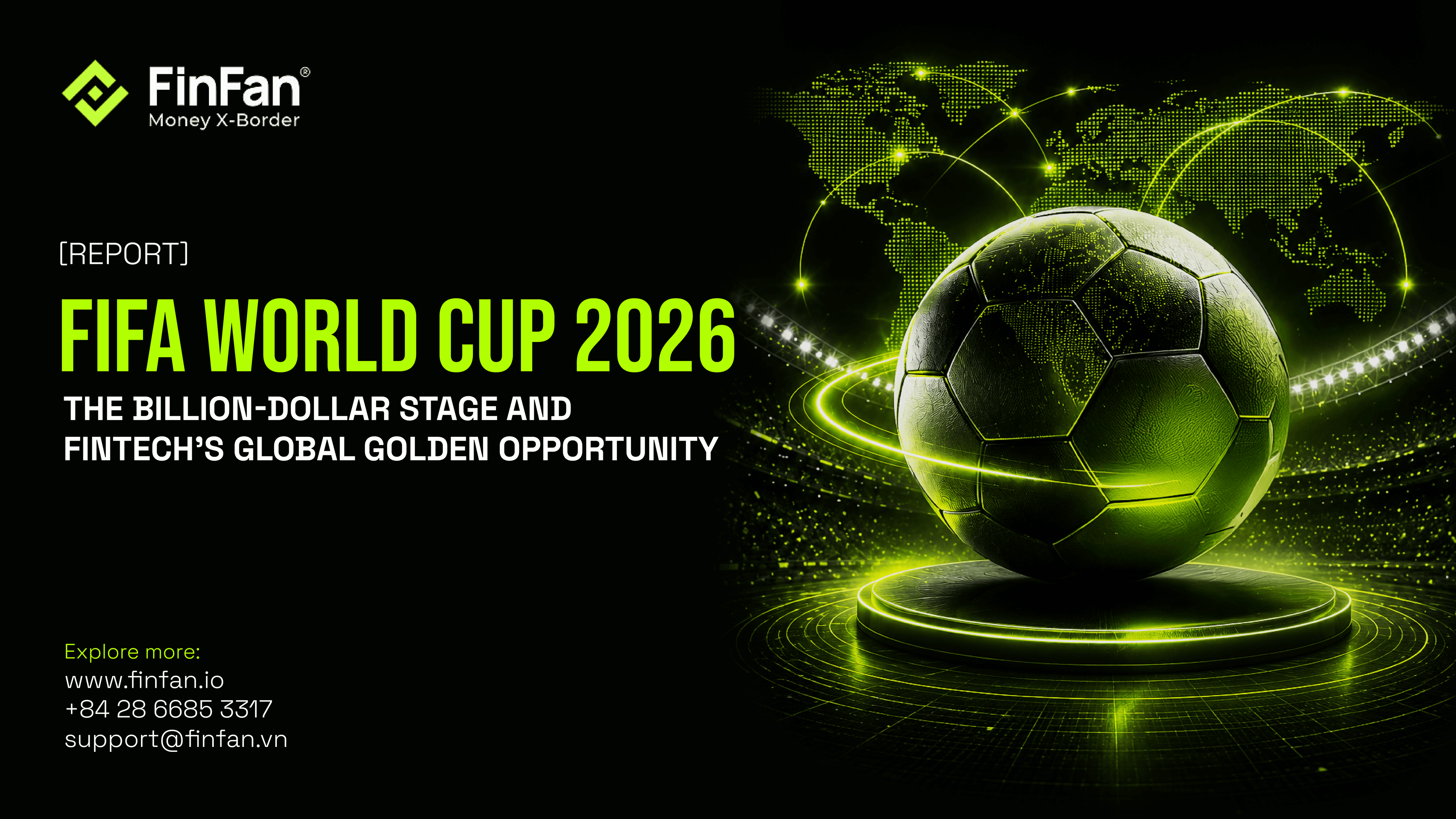
There is little doubt that the FIFA World Cup 2026 will be the largest football tournament and one of the most profitable sporting events in global sports history.
With the tournament expanded to 48 national teams and 104 matches hosted across the United States, Canada, and Mexico, financial intelligence provider S&P Global Market Intelligence forecasts that FIFA's direct revenue from the event could reach USD 9 billion. Some analyses from sports economics organizations such as Sports Value even project total revenue to exceed USD 10.9 billion, representing a 56% increase compared to the FIFA World Cup Qatar 2022.
However, beyond the headline figures generated by broadcasting rights and sponsorship agreements, another rapidly growing economic engine is emerging behind the scenes: the mobile economy and cross-border payments ecosystem.
This article explores how The FIFA World Cup 2026 could become billion-dollar "Stage" for the global FinTech sector.
A Boost from International Travel and Cross-Border Payments
According to estimates published by sports data platform Sofascore, approximately 6.5 million fans are expected to travel between host cities and countries throughout the tournament.
Consider a football fan traveling from Vietnam to Los Angeles for a group-stage match, then heading to Mexico City before finishing the journey in Vancouver. Such a trip creates a complex financial ecosystem involving foreign exchange, airline ticket purchases, hotel bookings, transportation payments, and stadium merchandise spending.
According to Paysafe's latest report "All the Ways Players Pay: World Cup 2026 Edition", while credit cards remain widely used, demand for digital wallets (31%) and local payment methods (25%) is rising rapidly among traveling supporters. Foreign exchange friction, unfavorable conversion rates, and cross-border transaction delays continue to be major bottlenecks affecting both tourism-related businesses and consumers.
The Rise of Local Digital Wallets and the Growing Demand for Global Integration
The appeal of the FIFA World Cup 2026 goes far beyond fan engagement. It is also expected to generate substantial payment flows across multiple markets, creating an urgent need for merchants and online platforms to support payment solutions tailored to local consumer preferences.
According to Paysafe, each World Cup nation has its own preferred payment methods. In Brazil, the instant payment network Pix accounts for approximately 48% of all transactions, while in Peru, the PagoEfectivo digital payment system holds around 36% of the online payments market.
At the same time, the payment ecosystem surrounding the tournament is attracting growing interest from financial services and digital asset companies.
Research from FXC Intelligence indicates that approximately 88% of national teams participating in the FIFA World Cup 2026 have at least one sponsor operating in payments, banking, or fintech. The findings highlight that the World Cup is not merely a sporting spectacle but also a competitive arena for cross-border payment providers, digital wallet operators, digital banks, and fintech companies.
Recognizing this significant market opportunity, major cryptocurrency exchanges such as Kraken, according to industry publication Connecting the Dots in FinTech, have already secured official partnerships related to FIFA World Cup 2026 initiatives, aiming to bring digital finance and Web3 experiences to millions of football fans worldwide.
Opportunities for FinTech
According to a social media post in Vietnam discussing industries expected to benefit most during the FIFA World Cup 2026, FinTech was identified as one of the leading sectors poised for growth.
In addition, Paysafe's research shows increasing adoption of flexible and secure payment solutions, including digital wallets (31%), local payment methods (25%), and eCash solutions (22%).
These trends suggest that any friction within the payment journey could reduce the overall economic benefits generated by World Cup-related travel and consumer spending.
The World Cup has always been capable of igniting extraordinary passion among football fans across the globe. At the same time, it is becoming increasingly clear that FinTech is emerging as one of the fastest-growing industries in the new digital era.
As the FIFA World Cup 2026 approaches, the opportunity is becoming increasingly evident: the right payment strategy can enable businesses, merchants, and platform operators to transform the world's largest sporting event into a sustainable long-term competitive advantage.
Reference
- Business Reporter. (2026, March 02). Instant payments redefine fan engagement ahead of the 2026 World Cup. (https://www.business-reporter.co.uk/banking--fintech/instant-payments-redefine-fan-engagement-ahead-of-the-2026-world-cup)
- Paysafe. (2026, Jun 02). The World Cup fan travel economy: Soccer summer behavior. (https://www.paysafe.com/en/resource-center/the-world-cup-fan-travel-economy-soccer-summer-behavior/)
- Sofascore. (2026, Jun 14). How much revenue will the 2026 FIFA World Cup generate? (https://www.sofascore.com/news/how-much-revenue-will-the-2026-fifa-world-cup-generate)
- Sports Value. (2026, February 19). The 2026 FIFA World Cup will be the most lucrative in history, with revenues expected to exceed US$10.9 billion. (https://www.sportsvalue.com.br/en/the-2026-fifa-world-cup-will-be-the-most-lucrative-in-history-with-revenues-expected-to-exceed-us-10-9-billion/)
- TV Tech. (2026, Jun 03). Study: Record revenue expected for FIFA World Cup 2026. (https://www.tvtechnology.com/insights/analysis/study-record-revenue-expected-for-fifa-world-cup-2026)

Dr. Tuyen Nguyen
Money Beyond Borders