
What Is the Difference Between a Bank Code and a SWIFT Code?

Bank Code and SWIFT Code are both identifiers used in financial transactions. However, these two types of codes serve completely different purposes. While Bank Codes are commonly used to identify banks or branches in domestic transactions, SWIFT Codes are international identifiers used to transfer and receive money across borders. For individuals and businesses making international transactions, confusion between these two codes can cause transactions to be delayed, incur costs, or even be returned. In this article, you will learn what is Bank Code? What is SWIFT Code? And the difference between Bank Code and SWIFT Code.
What Is a Bank Code?
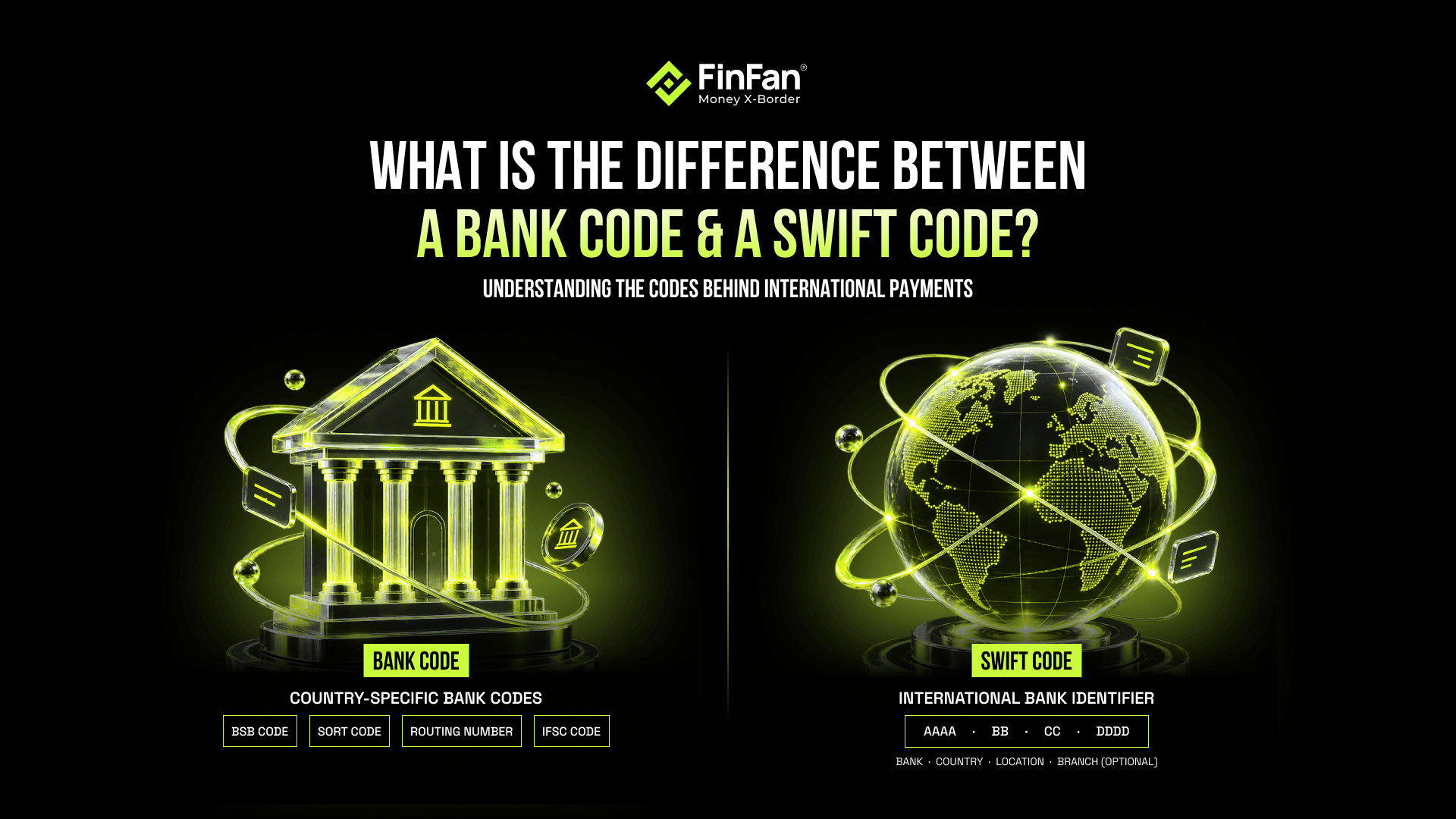
A bank code is an identifier assigned to a bank or bank branch within a specific country. Depending on the market, it may have different names, including:
- Routing Number in the United States
- Sort Code in the United Kingdom
- BSB Code in Australia
- IFSC Code in India
Bank codes are commonly used for:
- Domestic bank transfers
- Payments between banks within the same country
- Automated payments and recurring transactions
Simply put, a bank code helps identify the correct bank and branch within a domestic banking system.
What Is a SWIFT Code?
A SWIFT code, also known as a Bank Identifier Code (BIC), is an international identifier used within the SWIFT network.
A SWIFT code usually consists of 8 or 11 characters:
- 4 characters: bank code
- 2 characters: country code
- 2 characters: location code
- 3 characters (optional): branch code
Example: BFTVVNVX
Where:
- BFTV = bank code
- VN = country code (Vietnam)
- VX = location code
A SWIFT code is typically required when:
- Receiving money from overseas
- Sending international transfers
- Paying foreign suppliers
- Receiving payments from international customers
Learn more: What Is a SWIFT Code? The Role of SWIFT Codes in International Money Transfers
The Difference Between a Bank Code and a SWIFT Code

When Do You Need a SWIFT Code?
You will most likely need a SWIFT Code if you are:
- A freelancer receiving payments from overseas clients.
- An export business.
- A company providing services to international customers.
- An individual receiving money from family members abroad.
In these situations, providing the correct SWIFT Code is essential to ensure that your transaction is processed accurately. Entering an incorrect SWIFT Code may result in:
- Payment delays.
- Additional amendment or processing fees.
- Funds being returned to the sender.
- More time spent on reconciliation and investigation.
Learn more: How to Look Up a SWIFT Code Quickly and Accurately
What Challenges Do Businesses Face When Receiving International Payments?
A business may receive payments from dozens of partners across different countries. Each payment may have different transfer details, payment references, and settlement times.
At the end of the month, finance teams often have to manually reconcile each transaction to determine:
- Who made the payment.
- Which invoice or order the payment belongs to.
- Whether any payments are still outstanding.
As transaction volumes increase, managing international cash flows becomes much more complicated than simply providing a SWIFT Code.
An International Payment Collection Solution for Businesses
This is where international payment collection platforms can make a difference.
IRID (Inbound Routing & Identity Descriptor) is an international payment collection platform developed by FinFan and operated on the infrastructure of global financial partner Visa. Instead of simply providing bank account details and waiting for funds to arrive, businesses can actively manage their international cash flows on a centralized platform.
With IRID, businesses can:
- Receive international payments through a single unique identifier.
- Monitor transactions and balances on a centralized dashboard.
- Store supporting documents for each transaction.
- Simplify reconciliation processes.
- Gain greater control over international cash flows.
Simply put:
You don't just receive international payments—you manage and control them.
H2: Frequently Asked Questions
1. Is a SWIFT Code the same as a Bank Code?
No. A Bank Code is generally used for domestic transactions, while a SWIFT Code is used for international payments.
2. Is a SWIFT Code required for international transfers?
In most cases, yes. A SWIFT Code helps identify the recipient bank within the global SWIFT network.
3. Can I use a Bank Code to receive money from overseas?
Generally, no. International senders typically require a SWIFT Code rather than a domestic Bank Code to process cross-border payments.
Conclusion
Both Bank Codes and SWIFT Codes are banking identifiers, but they serve very different purposes. While Bank Codes are designed for domestic transactions, SWIFT Codes are an essential part of international payments. For businesses that frequently receive money from overseas, managing international cash flows goes beyond simply providing the correct SWIFT Code. They also need a solution that helps track, reconcile, and manage transactions more efficiently.
Contact FinFan today so our team will guide you to fast, secure financial solutions.
- Website: https://finfan.io
- Email: support@finfan.vn
- Phone: +84 2866.853.317
Disclaimer
IRID is a technology platform developed by FinFan (Nhat Phuong JSC — Best Way Corporation) that enables individuals and businesses in Vietnam to receive and manage international funds. IRID operates on the infrastructure of international financial partners. FinFan is not a bank and does not provide deposit services.
The information provided in this article is for reference and general knowledge purposes only and does not constitute formal legal, financial, or investment advice. Regulatory documents, State Bank of Vietnam regulations, and internal commercial bank policies are subject to change. Clients and readers should consult directly with transaction banks or legal advisors before making financial decisions.

Dr. Tuyen Nguyen
Money Beyond Borders