






Open Finance in Vietnam: Outlook and Infrastructure Ahead

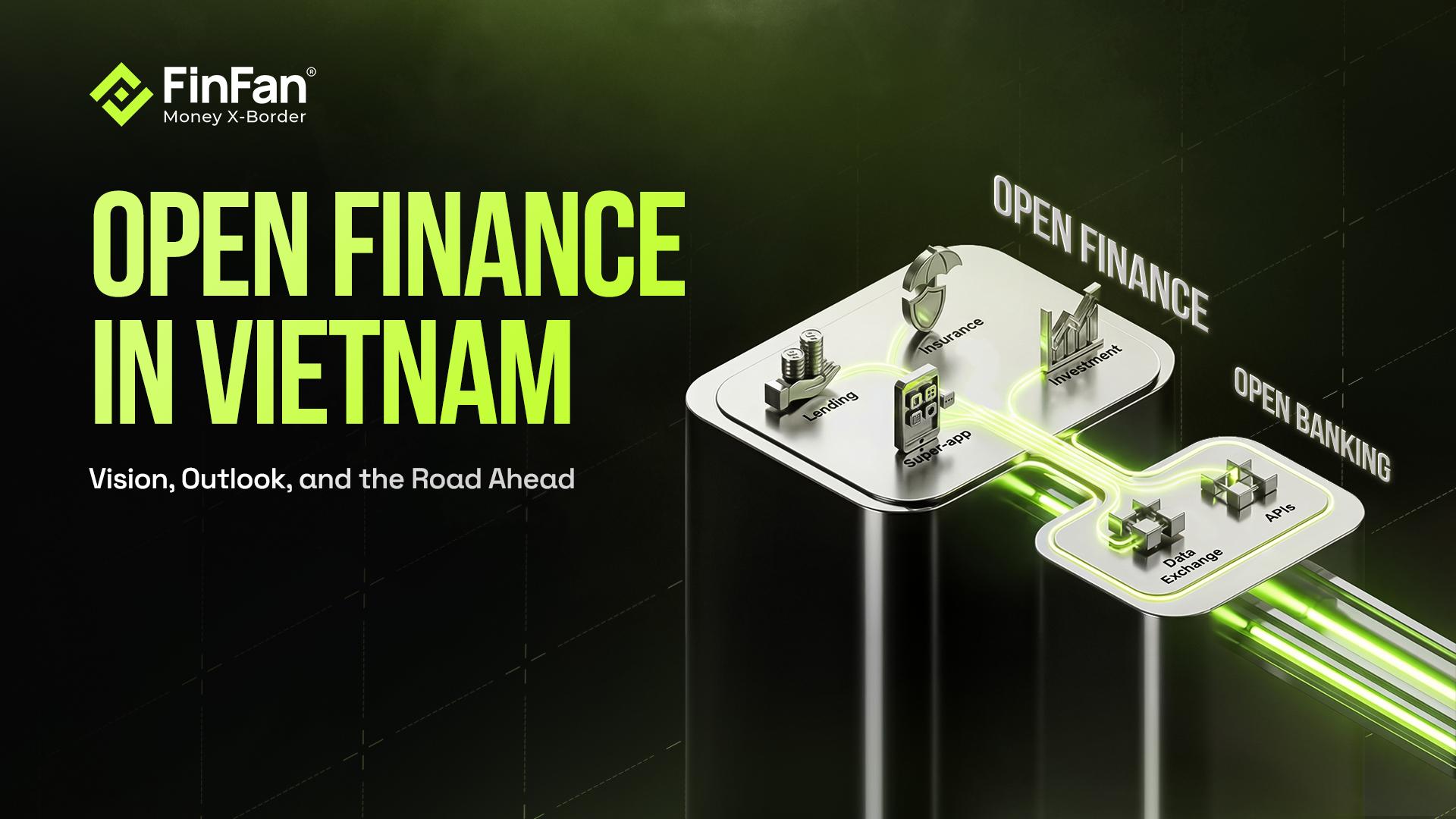
Vietnam's financial sector is transforming, moving past Open Banking toward the broader, structural concept of Open Finance due to accelerating digital adoption and changing expectations regarding data access and interoperability. Open Finance is an ecosystem approach enabling financial and non-financial actors to connect through secure, standardized, and consent-driven data sharing, vital as Vietnam becomes more digitally interconnected.
From Open Banking to Open Finance: A Broader Scope
Open Banking focuses on bank data and payment APIs; Open Finance expands this to include a broader range of financial services like lending, insurance, and investments. In Vietnam, Open Banking is fragmented, relying on bilateral bank-fintech partnerships. Open Finance seeks to move beyond one-off integrations to a scalable, interoperable financial architecture.
This transition requires technology, policy, risk, data governance, and market alignment.
Why Open Finance Matters for Vietnam’s Digital Economy
Vietnam’s digital economy is expanding rapidly, supported by a young population, high mobile penetration, and strong momentum in e-commerce and digital services. As businesses increasingly operate across platforms and borders, financial services are expected to become more embedded, faster, and context-aware.
Open Finance supports easier financial access and efficient workflows. SMEs benefit from simpler onboarding, better cash flow visibility, and customized products. Importantly, Open Finance is often positioned as an enabler rather than a disruptor. Its value lies in improving how financial services are delivered and connected, rather than replacing existing institutions.
Vietnam’s Regulatory Direction: Enabling, Yet Cautious
Vietnam's evolving regulatory environment supports technology in financial services while prioritizing stability and risk control. Recent policies have clarified definitions for e-money, payment intermediaries, and cooperation between licensed institutions and tech platforms.
Open Finance is viewed not as deregulation, but as a structured collaboration model with defined roles for licensed entities, tech providers, and platforms. This measured approach encourages innovation alongside safeguards for consumer protection, data security, and financial integrity, reflecting Vietnam's broader regulatory philosophy.
Infrastructure First: APIs, Data, and Trust
Open Finance relies on foundational infrastructure: secure APIs, standardized data, consent management, and robust risk controls. Without these, interoperability and trust are limited.
In Vietnam, while many financial institutions are modernizing their systems, varying maturity levels mean Open Finance development will likely be uneven initially.
Trust is also critical. Businesses and consumers must be confident in data handling. Transparency, clear consent, and strong cybersecurity are prerequisites, not optional features, for data sharing.
Practical Use Cases Over Theoretical Potential
While Open Finance is often discussed in abstract terms, its adoption will ultimately be shaped by practical, high-impact use cases. In Vietnam, these may include streamlined payment flows for digital platforms, improved reconciliation for cross-border commerce, or more efficient access to financial services for underserved segments.
It is important to note that Open Finance does not automatically guarantee better outcomes. Its effectiveness depends on execution, ecosystem collaboration, and alignment with real market needs. Solutions that prioritize operational efficiency and risk management are more likely to gain traction than those built purely on novelty.
Challenges That Cannot Be Ignored
Despite its potential, Open Finance faces several challenges in Vietnam. Data standardization remains a work in progress, and integration costs can be significant. Smaller institutions and businesses may lack the resources to adopt new frameworks quickly.
There is also a knowledge gap. Concepts such as consent-based data sharing, infrastructure providers versus service providers, or the distinction between financial data access and money movement are not always well understood. Addressing this gap requires ongoing education and clear communication across the ecosystem.
A Long-Term Play, Not a Short-Term Trend
Open Finance in Vietnam should be viewed as a long-term structural development rather than a short-term trend. Its impact will likely unfold gradually, shaped by regulatory clarity, infrastructure investment, and market readiness.
For businesses and financial service providers, the key question is not whether Open Finance will exist, but how and when it becomes relevant to their specific operations. Early engagement can offer learning advantages, but success depends on aligning innovation with compliance, risk awareness, and sustainable business models.
Looking Ahead
Vietnam’s Open Finance journey is still in its early stages. What matters now is not speed, but direction. By focusing on interoperability, trust, and real economic value, Open Finance can contribute to a more connected and resilient financial ecosystem.
As the landscape continues to evolve, stakeholders that prioritize infrastructure, collaboration, and responsible innovation will be better positioned to adapt to the next phase of Vietnam’s digital finance transformation.
Arthur.

Dr. Tuyen Nguyen
Money Beyond Borders