






Vietnam FinTech Sandbox 2025: Strengthening Domestic Infrastructure for Scalable Inbound Payments

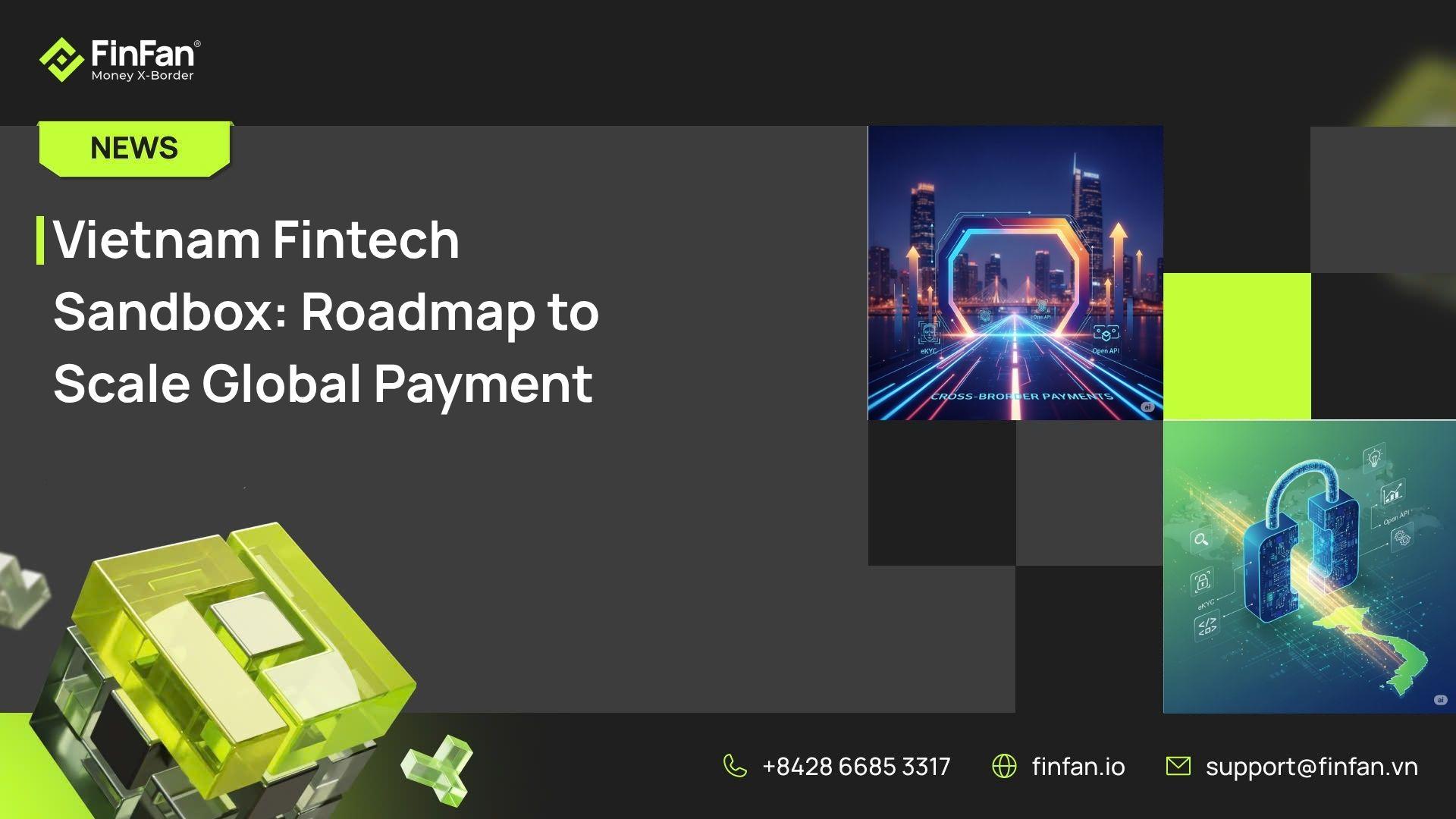
Vietnam’s rapid economic growth and accelerating digitalization are reshaping its financial services landscape. As the government advances its vision for a cashless and regulated digital economy, the issuance of Decree 94/2025/ND-CP marks a critical milestone. The decree formally establishes Vietnam’s first FinTech Regulatory Sandbox for the banking sector, creating a controlled environment for testing selected FinTech solutions strictly within the territory of Vietnam. Importantly, the Sandbox does not permit cross-border testing or implementation. Instead, its strategic value lies in strengthening Vietnam’s domestic financial infrastructure, particularly in areas that directly affect how international funds are received, processed, and distributed once they enter the country.
Vietnam’s Inbound Payment Landscape: Scale and Structural Demand
With a population exceeding 100 million and high levels of financial inclusion, Vietnam represents one of Southeast Asia’s most dynamic inbound payment markets. Annual personal remittances are estimated between USD 16–19 billion, supported by major corridors from the United States, Australia, Japan, and South Korea. In parallel, Vietnam’s export-driven economy and expanding digital services sector continue to generate demand for efficient inbound settlement and payout mechanisms.
Despite this scale, the challenge is not the volume of inbound flows but the domestic “last-mile” infrastructure required to deliver funds efficiently, securely, and compliantly to end beneficiaries inside Vietnam.
The Last-Mile Bottleneck in Vietnam’s Domestic Payment Infrastructure
Vietnam’s payment ecosystem has made significant progress on the front end, yet several structural barriers persist at the domestic delivery layer.
Beneficiary identification remains complex, as KYC and AML processes are often fragmented and heavily manual. The absence of standardized, regulator-approved eKYC frameworks increases friction, delays onboarding, and contributes to higher transaction failure rates for inbound payments.
At the same time, payout networks remain highly fragmented. Achieving nationwide coverage requires integration with multiple banks, the NAPAS system, and a growing number of e-wallets, each with distinct technical standards and operational processes. This fragmentation raises costs and slows scalability. These challenges are domestic in nature, but they directly affect Vietnam’s capacity to efficiently absorb and distribute international funds.
Decree 94/2025/ND-CP officially establishes a FinTech Regulatory Sandbox supervised by the State Bank of Vietnam (SBV), effective from July 1, 2025. The Sandbox allows licensed credit institutions and legally established FinTech companies in Vietnam to test selected solutions under controlled conditions. All Sandbox activities must be conducted within Vietnam, and cross-border implementation is explicitly not permitted. The Sandbox is therefore not a mechanism for testing international payment flows, but a policy tool to modernize domestic financial capabilities.
New Opportunities Enabled by a Stronger TradFi Infrastructure
As traditional cross-border payment infrastructure becomes more efficient, the benefits extend across the global economy. Corporations gain better control over cash flows and treasury operations. Small and medium-sized enterprises are able to access international markets with lower costs and greater transparency. Individuals and service providers benefit from faster, more reliable cross-border transfers.
Importantly, these improvements are achieved without altering the fundamental trust model of the financial system. Licensed institutions remain accountable, regulators retain visibility, and compliance standards continue to define participation.
FinFan’s Role: Advancing TradFi Connectivity from Vietnam
At FinFan, we view the future of cross-border payments through the lens of traditional finance modernization. As a fully licensed institution under the State Bank of Vietnam and a Visa partner providing IBAN services, FinFan operates squarely within the regulated financial system.
Our platform functions as a payment infrastructure aggregator, connecting international payment networks with domestic banks, e-wallets, and mobile money providers. By leveraging API-based connectivity and standardized digital processing, we help reduce settlement times, increase transparency in pricing and FX, and simplify multi-currency account management.
All services are delivered within approved regulatory frameworks, ensuring that innovation is aligned with compliance, risk management, and supervisory requirements.
The Future of Cross-Border Payments in Traditional Finance
The primary objective of the FinTech Regulatory Sandbox is to generate empirical evidence for future policymaking. Over time, successful Sandbox initiatives may inform national standards for open banking, digital identity, and data sharing.
A stronger domestic financial foundation enhances Vietnam’s ability to handle increasing inbound payment volumes efficiently, transparently, and in full compliance with regulatory requirements without blurring jurisdictional or legal boundaries.
Vietnam’s FinTech Regulatory Sandbox is not a cross-border testing framework, nor is it designed to replace existing international payment systems. Its true value lies in reinforcing domestic financial infrastructure, particularly the last-mile capabilities that determine how effectively international funds are received and distributed within the country. By focusing on eKYC, Open API connectivity, and regulated cooperation models, the Sandbox lays the groundwork for a more resilient, scalable, and compliant inbound payment environment. A strong domestic system remains the essential prerequisite for Vietnam’s deeper integration into global financial flows.
*Disclaimer: This article is for informational purposes only and does not constitute financial, investment, or digital asset services. FinFan operates strictly within applicable laws and regulations and provides regulated financial services only. *

Dr. Tuyen Nguyen
Money Beyond Borders